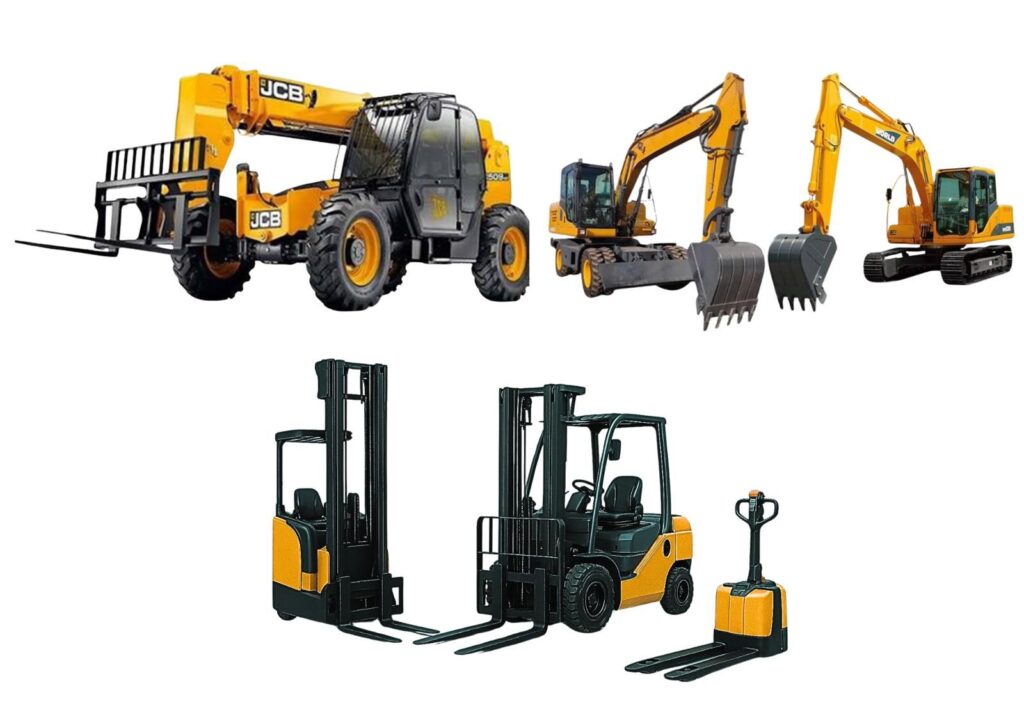
Getting a counterbalance forklift certificate is straightforward once you know the order of the steps. Most people only need to decide which scheme suits them, book a course, complete the training and pass the assessment. This guide walks through each stage, from deciding whether you need the certificate to using it at work.
Forklift Training Centre offers accredited counterbalance training for individuals and employers in Stamford, Peterborough, Huntingdon and Wisbech, with onsite courses available across the UK. The steps below apply wherever you train.
Step 1: Check Whether You Need a Certificate
The UK has no statutory forklift licence, but employers must make sure that anyone operating a lift truck is trained, competent and authorised. In practice, that means most employers and agencies ask for a certificate or operator card before they will let you drive a counterbalance forklift.
If you are applying for warehouse, logistics, manufacturing or yard work, or your current employer wants proof of training, a counterbalance forklift certificate is the usual way to provide it.
Step 2: Choose Between RTITB and NPORS
Both schemes are widely recognised, and we deliver both.
- RTITB is closely linked with warehousing, logistics and materials handling.
- NPORS is commonly associated with construction, civils and plant operation.
If you already have a job in mind, check whether the employer prefers RTITB or NPORS. If you are unsure, ask us before booking. You can read more on our RTITB and NPORS pages.

Step 3: Decide Which Type of Training You Need
The right course depends on where you are starting from:
- Novice training is for people who have never operated a counterbalance forklift.
- Experienced operator training is for those who have driven one but need a recognised certificate.
- Refresher training is for operators whose skills or certificate need updating.
- Conversion training is for operators who already hold training on a different type of truck.
Choosing the wrong level can mean paying for more training than you need, or less than you require, so describe your experience honestly when you enquire.
Step 4: Choose Where You Will Train
You have two options:
- At the Peterborough training centre, if you are booking as an individual or bringing a small group.
- Onsite at your workplace, if an employer wants staff trained on their own trucks and in their own working areas. The machines and a safe working area need to be provided. See our onsite training page for details.
Step 5: Book and Prepare
Booking is by phone, WhatsApp or email. Once your date is confirmed, you will receive joining instructions.
Before the course starts:
- Check the entry requirements. Learners should be at least 16 and have a basic understanding of English, so they can follow the safety instructions.
- Bring safety boots and clothing suitable for working outdoors and indoors. Photo ID is recommended.
- Read up on what to expect. Our guide to your first forklift training session explains how the day usually runs.
Step 6: Complete the Theory and Practical Training
Training combines classroom theory with supervised practice on the truck. Topics normally include controls, pre-use checks, stability and load capacity, loading and stacking, manoeuvring, and working safely around pedestrians and other vehicles.
For a full breakdown of the course content, see our guide to what counterbalance forklift training involves. If you are wondering how long the process takes, our article on forklift training duration explains what affects the length of a course.
Step 7: Pass the Assessment
At the end of the course you will be assessed in two parts:
- Theory: a test covering safety, legislation and machine knowledge.
- Practical: a demonstration that you can operate the truck safely and competently, including load handling and manoeuvring.
The assessment is there to show that you have understood the training and can apply it, so treat the practical session as a normal working shift: carry out your pre-use checks, take your time and keep a clear view around you.
Step 8: Receive Your Certificate or Operator Card
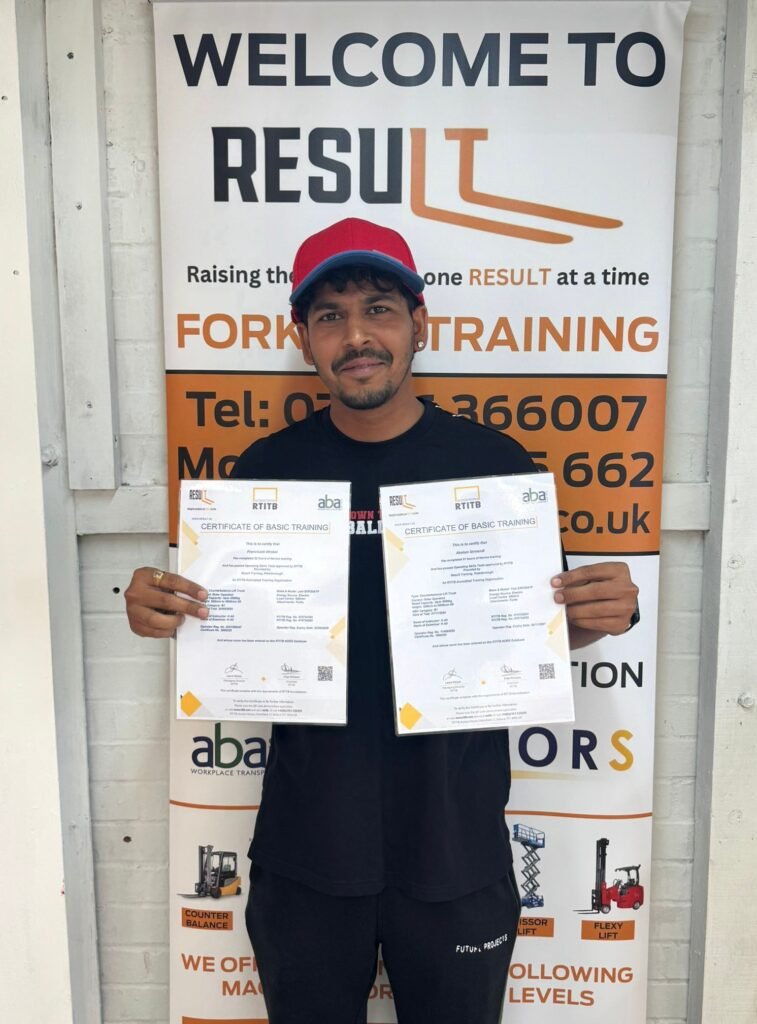
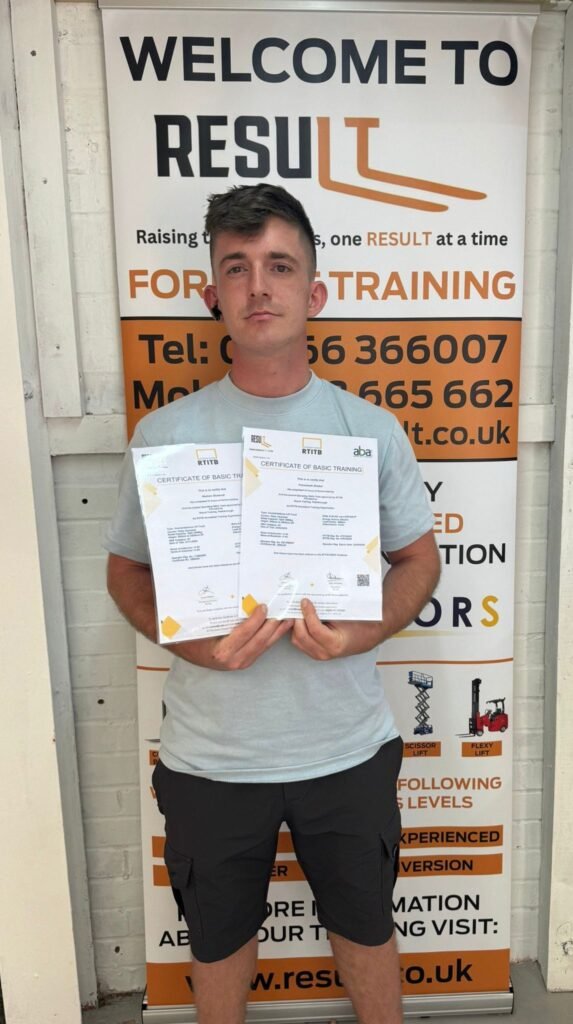
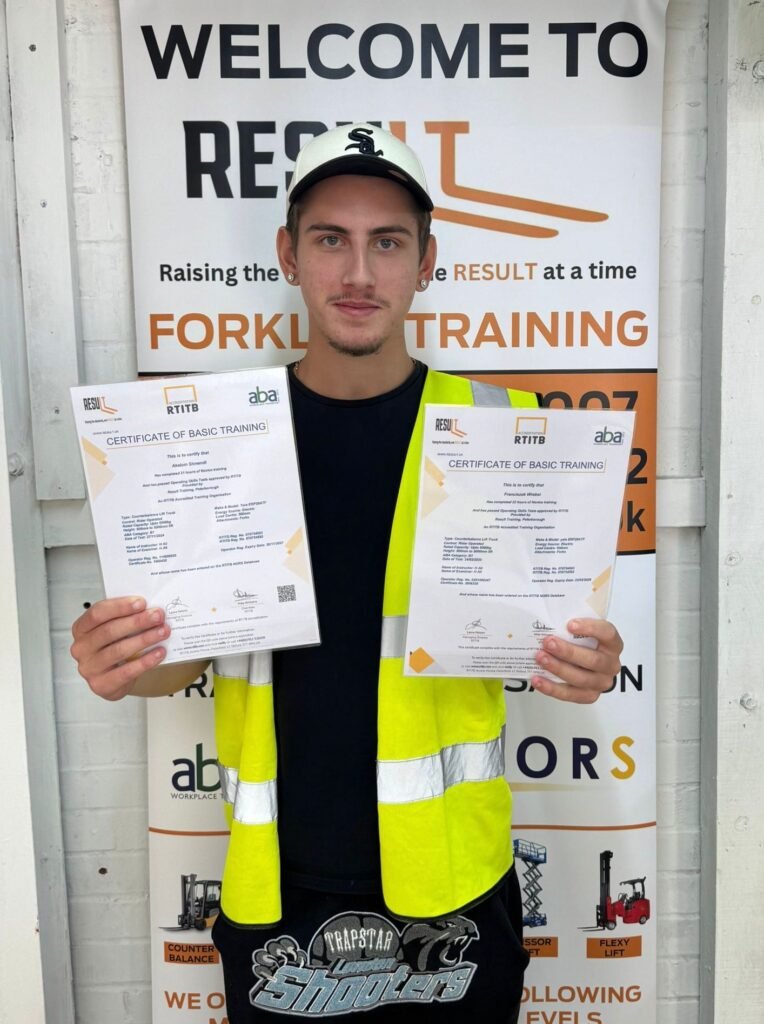
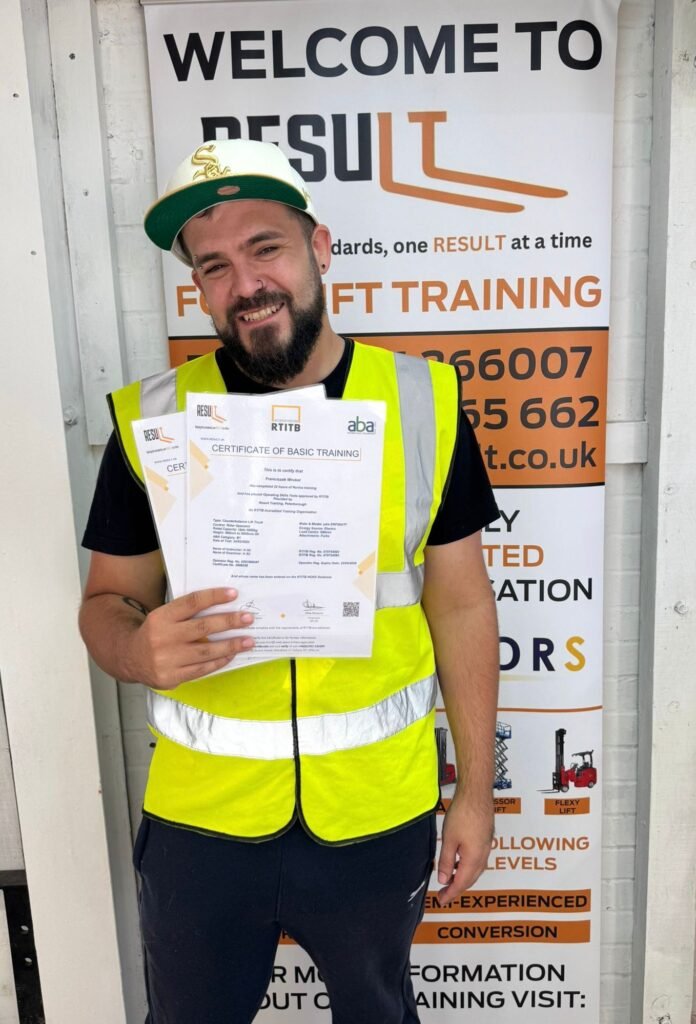
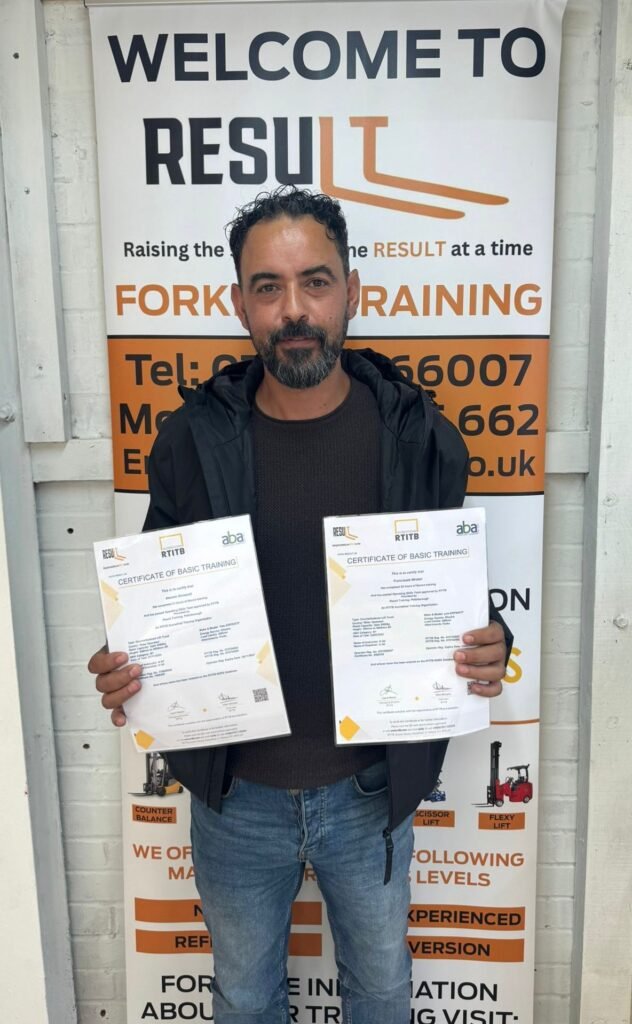
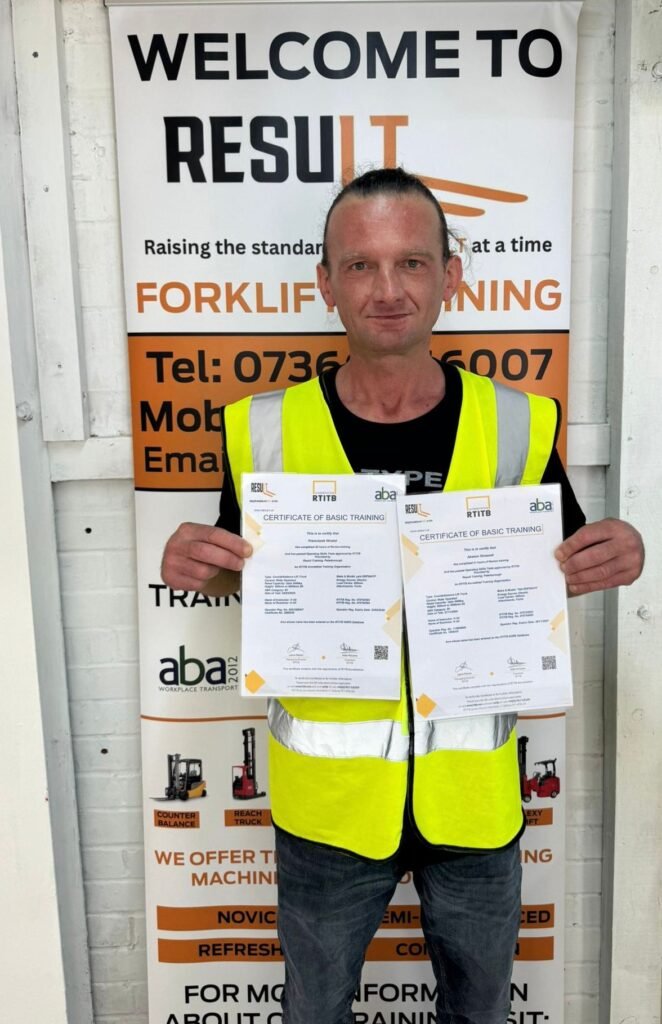
After a successful assessment you will receive an RTITB or NPORS certificate or operator card, depending on which training you choose. Cards are typically issued within a few working days, and temporary proof can be provided if you need to start work sooner.
Certificates are typically valid for 3 to 5 years, depending on the scheme. Check the date printed on yours and note the renewal point.
Step 9: Get Authorised and Keep Your Skills Current
A certificate shows that you have been trained. Your employer still has to authorise you to use specific trucks on their site, and may give you familiarisation with their layout and procedures.
After that, keep your standards high: carry out pre-use checks every shift, report faults and near misses, and arrange refresher training when your certificate nears expiry or your working conditions change. Our article on building strong forklift operating habits gives practical ideas.
Frequently Asked Questions
Choose between RTITB and NPORS, book a course that matches your experience, complete the theory and practical training, and pass the assessment. You then receive a certificate or operator card.
No. Novice courses are designed for people who have never driven a counterbalance forklift. Experienced operators can take a shorter route, depending on their needs.
Safety boots, suitable clothing and photo ID are recommended. For onsite training, the employer needs to provide the machines and a safe working area.
Cards are typically issued within a few working days, and temporary proof can be provided if you need it sooner.
Yes. We deliver onsite counterbalance training at employer premises across the UK, and individuals can also train at our Peterborough centre.
Ready to Get Certified?
If you are ready to start, visit our counterbalance forklift training page for course details, or contact us to discuss the right route for your experience and your workplace.